Magnetic or Not? Hunt
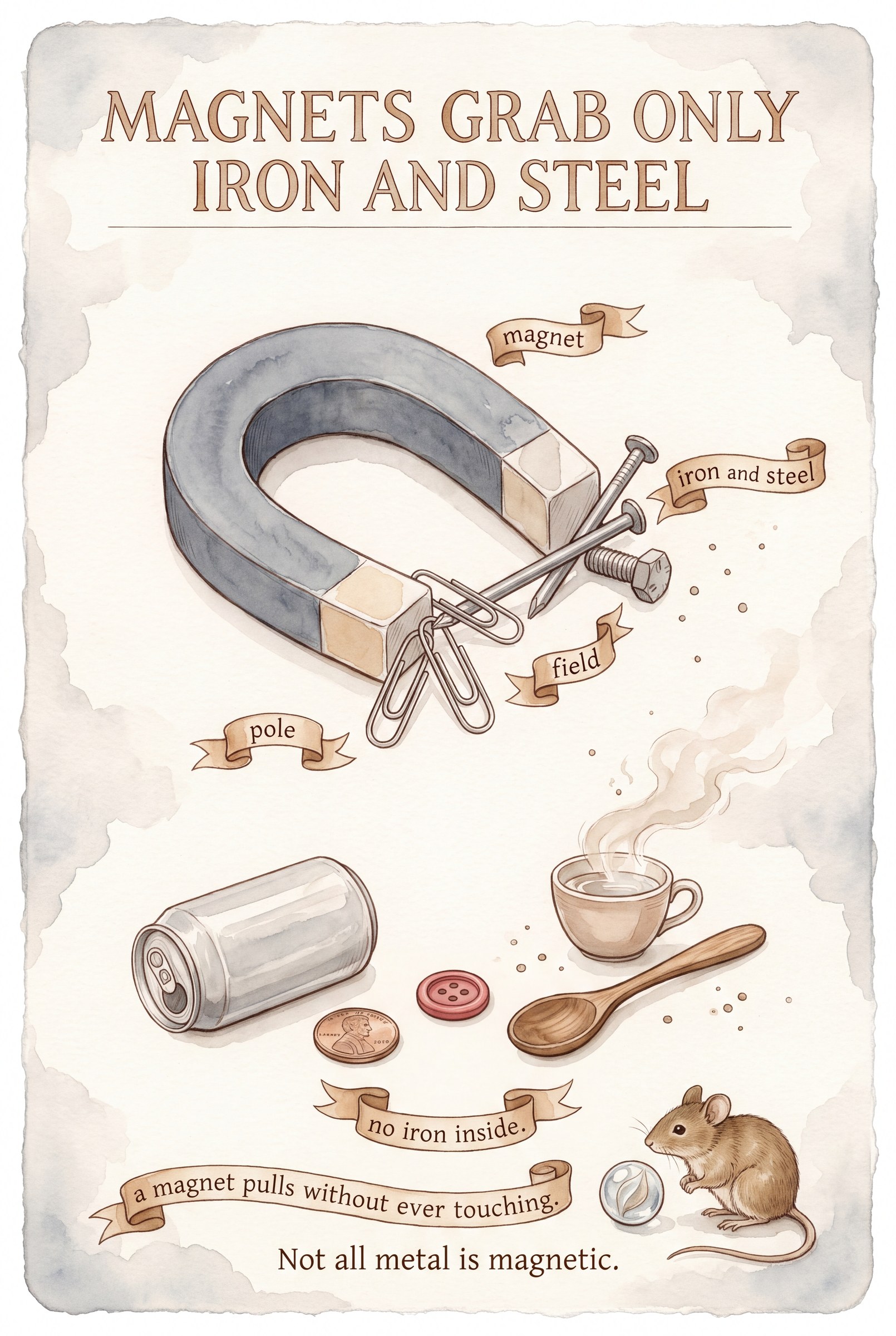
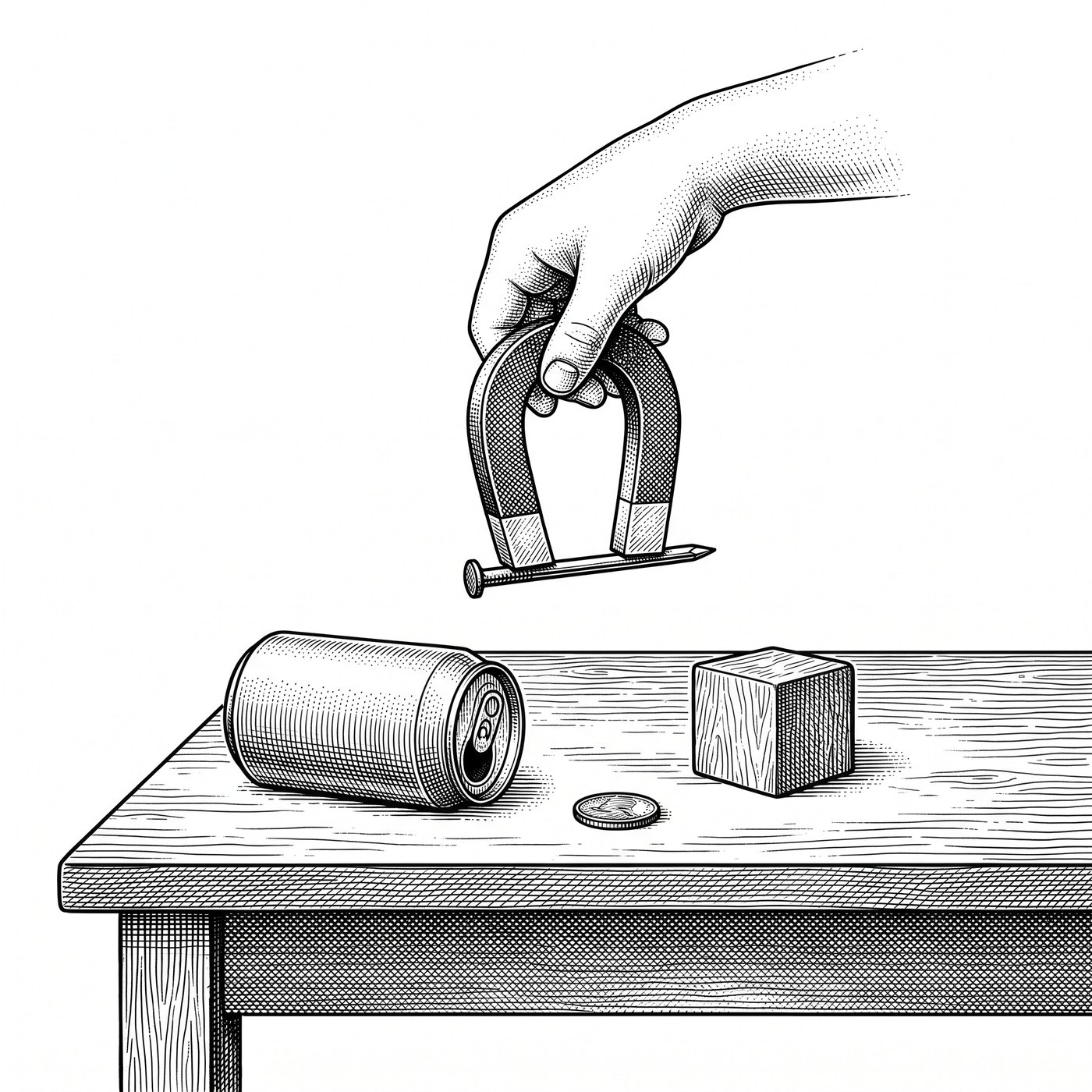
Magnets don't grab "metal" — they grab iron and steel, and the kids corner that secret themselves. The penny and the soda can sit ignored while the plain nail leaps.
⬇ This card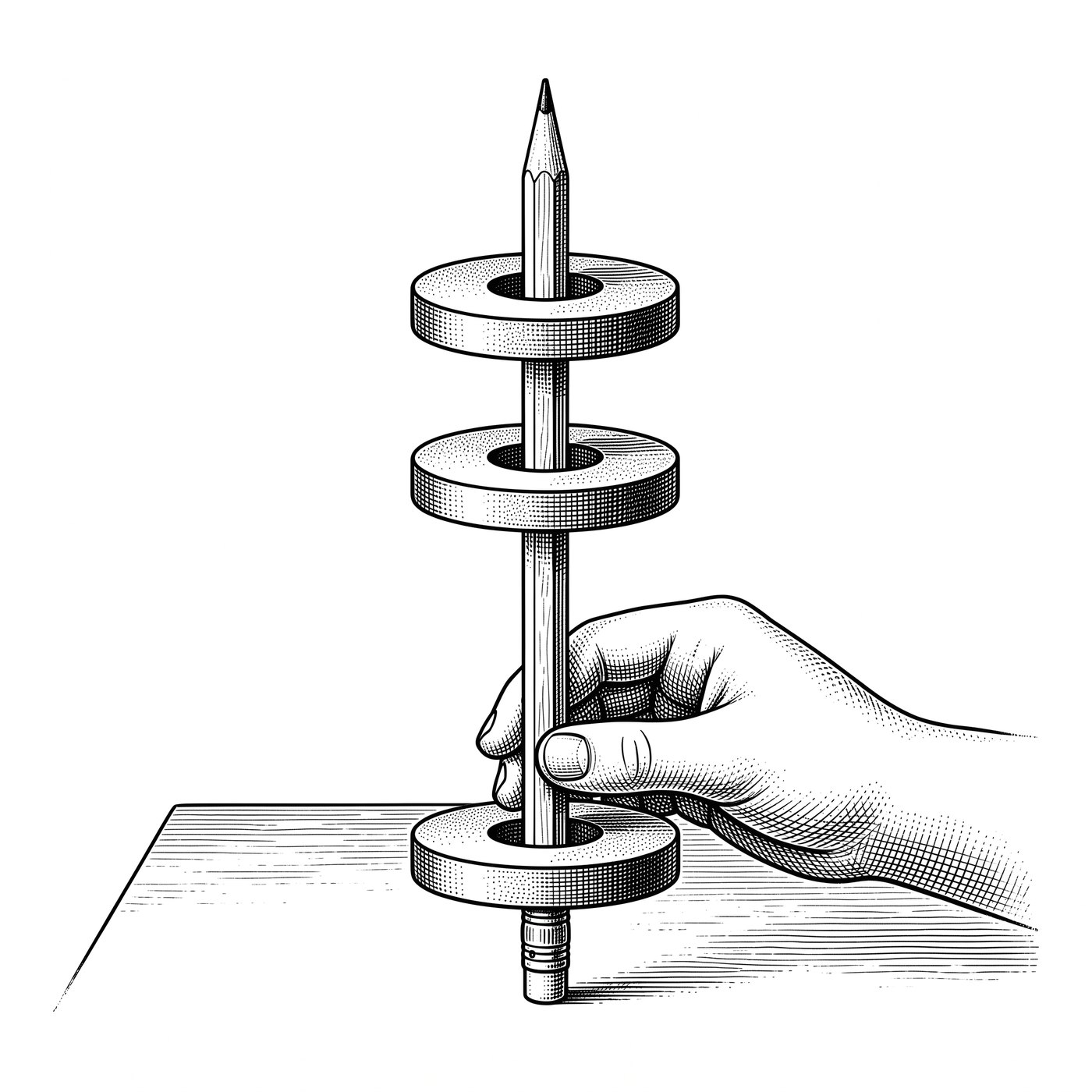
Attract & Repel Play
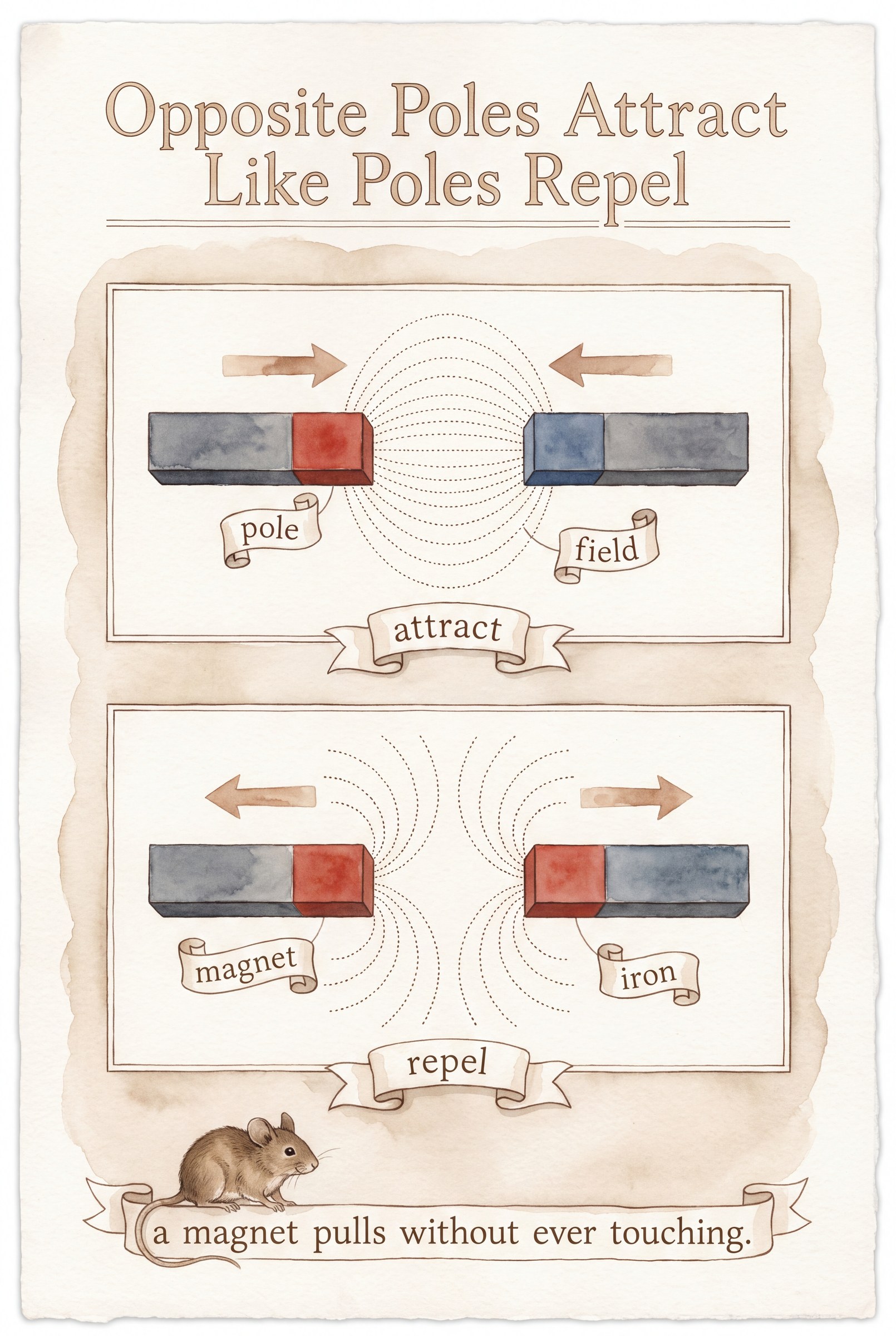
Every magnet has two ends — two poles — and they are different: one pairing snaps together, the flipped pairing pushes apart. Squash the floating ring-magnet stack and feel the invisible spring.
⬇ This card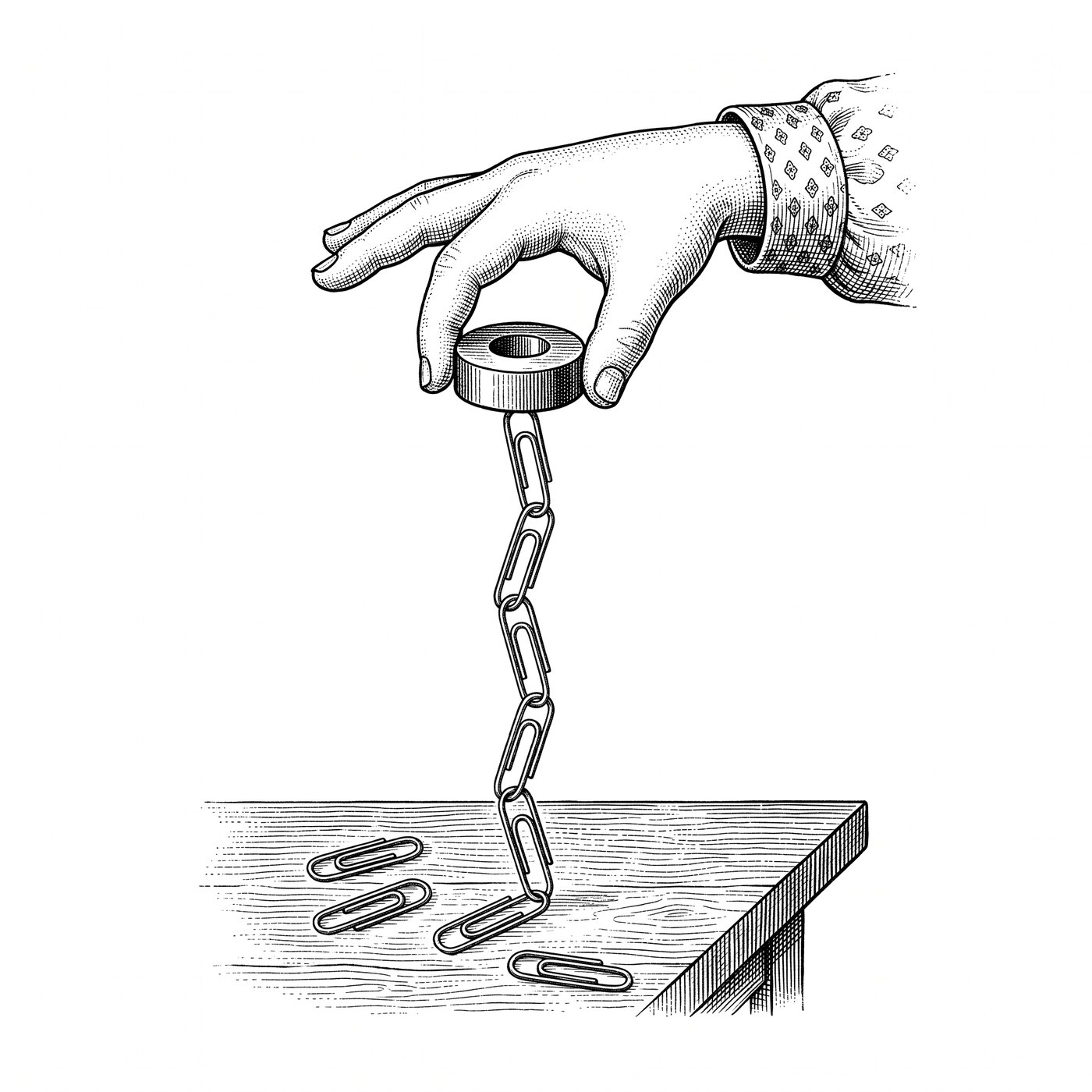
Paperclip Chains
Iron touching a magnet becomes a magnet itself — temporarily. Each clip passes the pull down the line like a bucket brigade, and the whole chain rains down the instant the real magnet lets go.
⬇ This card
Magnet Through Stuff
The field reaches right through cardboard, a book, water, even your own hand — the pull needs no touching. Finale: tow a sunken paper clip up the outside of a full glass, hands dry.
⬇ This card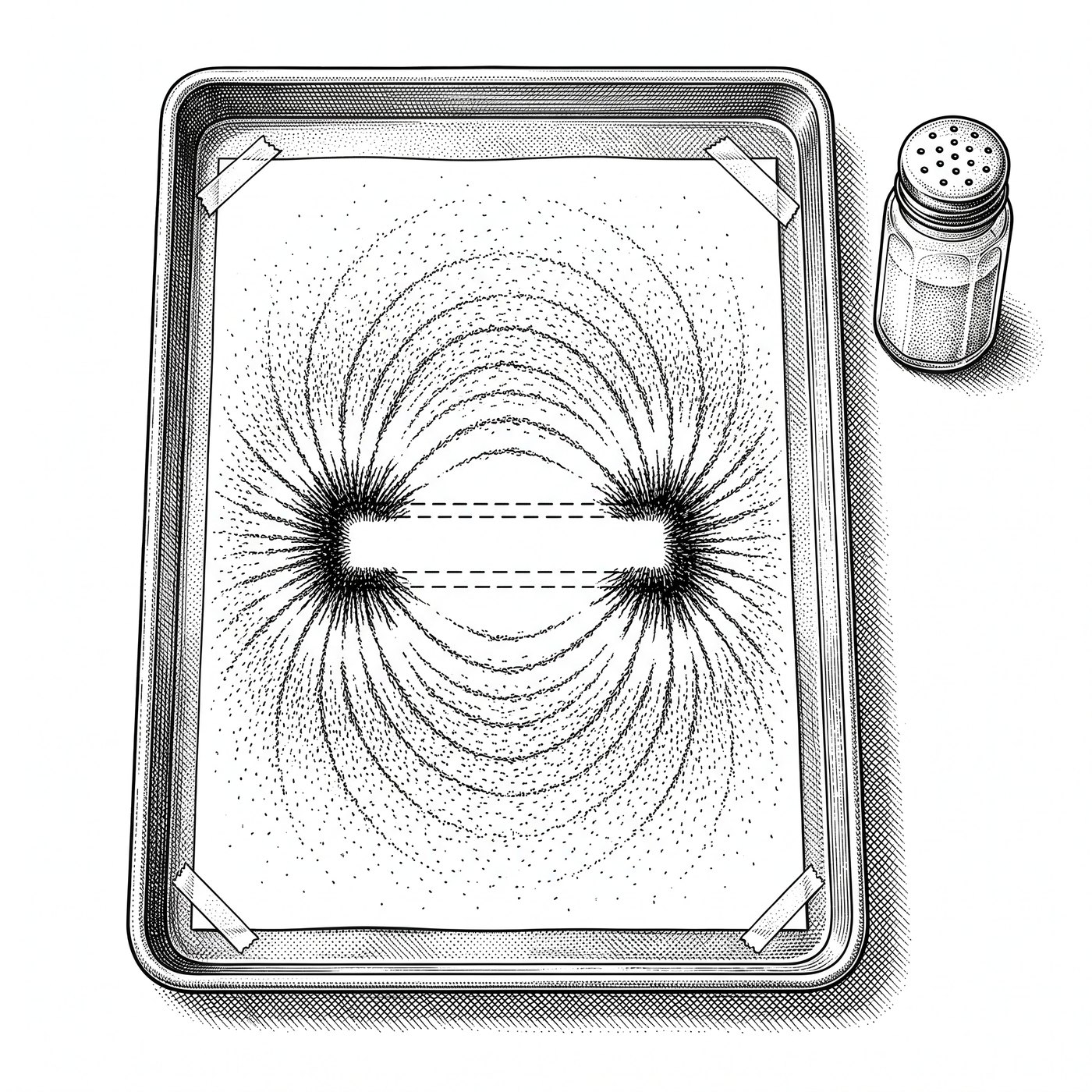
Iron Filings Field Display
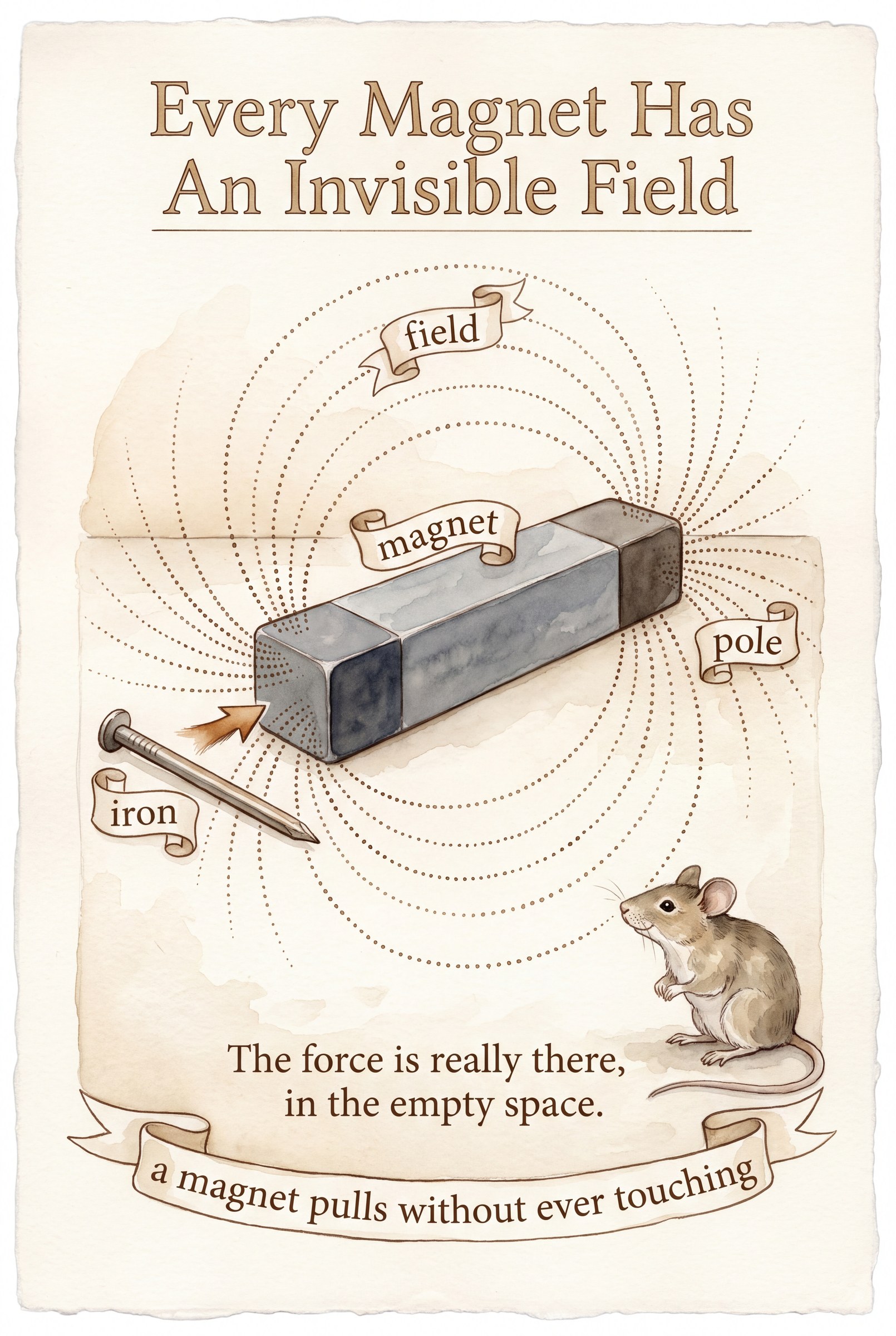
The invisible field made visible: sprinkle, tap, and the pattern snaps in — every line leaving one pole and curving home to the other. The filings don't create the shape; they reveal one that was there all along.
⬇ This card
Ferrofluid Spike Show
The field in three dimensions: a liquid full of iron dust leaps into a hedgehog of spikes along the field lines — and collapses into a puddle the instant the field leaves.
⬇ This card
One More Idea: The Earth Is a Magnet
Stroke a needle with a magnet, float it on a cork — and it slowly swings to point north, the same way every time. Something much, much bigger is grabbing it: you are standing on a magnet, and a compass is just a tiny magnet the Earth is holding.
- 3 watercolor posters — the invisible field, opposite poles attract & like poles repel, magnets grab only iron and steel
- 6 experiment cards — four kids-hands-on hunts and plays, plus the iron-filings centerpiece and the ferrofluid spike show
- Student binder — Overview, Copywork, Worksheet (predict-and-test hunt + draw-the-field), Song sheet
- Teacher guide, opening oration, and supply list
- Original song — "The Invisible Pull" + lyric sheet
- Every sheet is 8.5×11; the core packet is black-and-white printer-safe